Sherlock Holmes as a character and as an archetype has survived over 100 years. In fact, Arthur Conan Doyle’s most famous detective has been reinvented so many times and in so many mediums that the majority of people who have enjoyed a Holmes story have probably been consuming what’s known as a pastiche. A pastiche is something that imitates a work, taking elements or characteristics of a work and reinterpreting it. In terms of the Sherlock Holmes canon, this can be as straightforward as telling the same general story as a Holmes/Watson mystery but giving it a modern setting (think the BBC Sherlock TV show – which is genius!), or it could be a looser tip of the hat to the original Holmes, interpreted through another setting, character, genre, etc. I have some favorite books that have borrowed the character of Holmes have done delightfully original things with him, including the Mary Russell series by Laurie R. King which imagines Holmes in retirement finding an unusual new partner. Or the delightful series by Sherry Thomas that starts with A Study of Scarlet Women which gender-flipped the canon and stars Charlotte Holmes, a brilliant woman hemmed in by the strictures of what is expected of Victorian women.
Sherlock Holmes is in the public domain, which is partly why we see so many books using the character. But what’s fun about Sherlock Holmes pastiches is that even people who have never read a single story by Arthur Conan Doyle or seen a TV adaptation know the broad strokes of what Holmes represents: a brilliant investigator who solves crimes using near-superhuman levels of keen observation. Add in the companion character who helps ground him and tell his story and you’ve got ingredients that can be ported out of Victorian London and into any number of unusual settings. The books may change the names and the details, but the overall shape of Sherlock Holmes is still often visible, if you’re looking for it. I especially love books that take the Sherlock character and really run away with it. I wrote about one of my favorite Holmes-influenced genre blends with my post about The Case Files of Henri Davenforth series by Honor Raconteur. In this series a modern woman is transported to a world very like our late Victorian/early Edwardian era – Holmes’s era – but with magic. While there are many details about this series that are different, the architecture of Sherlock Holmes shines through in lots of places, especially in the way the mysteries are framed as case files written up by main detective Jamie’s partner, Henri.
If you like Sherlock Holmes, there are hundreds of directions your reading can go, so I’ve had some fun listing some of the most popular in an infographic below. Some are direct uses of the Holmes characters, others have what I call Sherlock Holmes “vibes”:
If you like Sherlock Holmes by Megan McArdle
Titles in the graphic:
Historical Mysteries
Starring Sherlock Holmes:
Horror
Starring Sherlock Holmes:
Sherlock Holmes and Count Dracula by Christian Klaver
Sherlock Holmes and the Shadwell Shadows: The First of The Cthulhu Casebooks by James Lovegrove
The Affair of the Mysterious Letter by Alexis Hall
A Curious Beginning by Deanna Rayburn
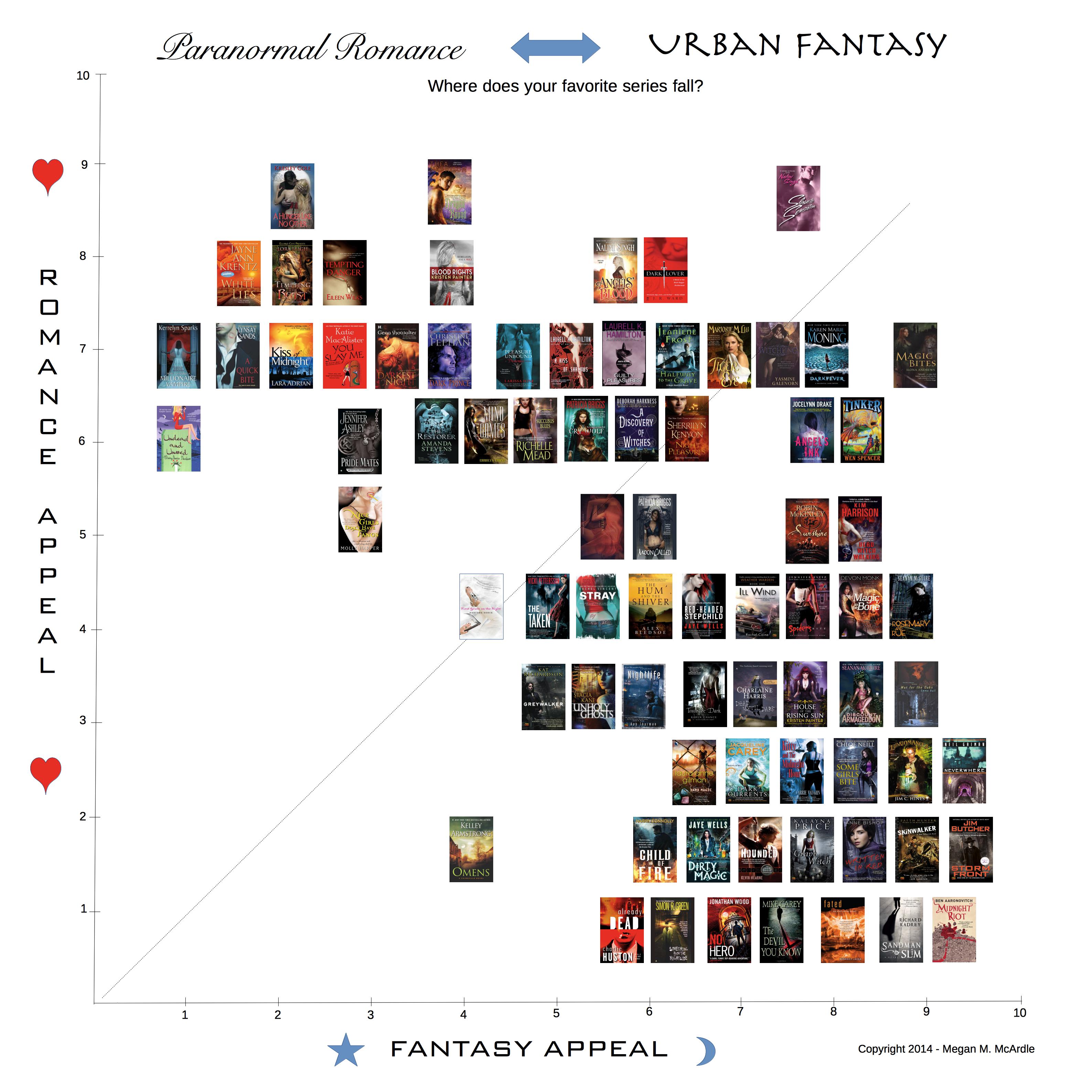
 ), urban fantasy is technically a subgenre of fantasy, and paranormal romance is a subgenre of romance (just as the names imply!), but the reading reality has always seemed more fluid to me. I read a lot of series that fall under one or another of those subgenre headings, and I’ve never been particularly fussy about what label gets printed on the spine. When I was in charge of ordering paperbacks for a library, I was forced to care about this issue, as I would be the one that would decide whether a book went on the “ROMANCE” spinner or the “SF/FANTASY” spinner. And believe it or not I found it surprisingly difficult at times. Sometimes I would violently disagree with the way the publisher had chosen to market a series. Maybe it was a book that had a cover and a subject heading that screamed romance and I thought it would appeal as much (or more) to fantasy fans. Maybe the book was all moody urban fantasy on the outside but all steamy romance between the covers. It was then that I started to think about these books all living on more of a spectrum: all books that shared a real-world, present day fantasy landscape and almost always included a crime/puzzle/mystery plot line. The difference was simply in the amount of romance.
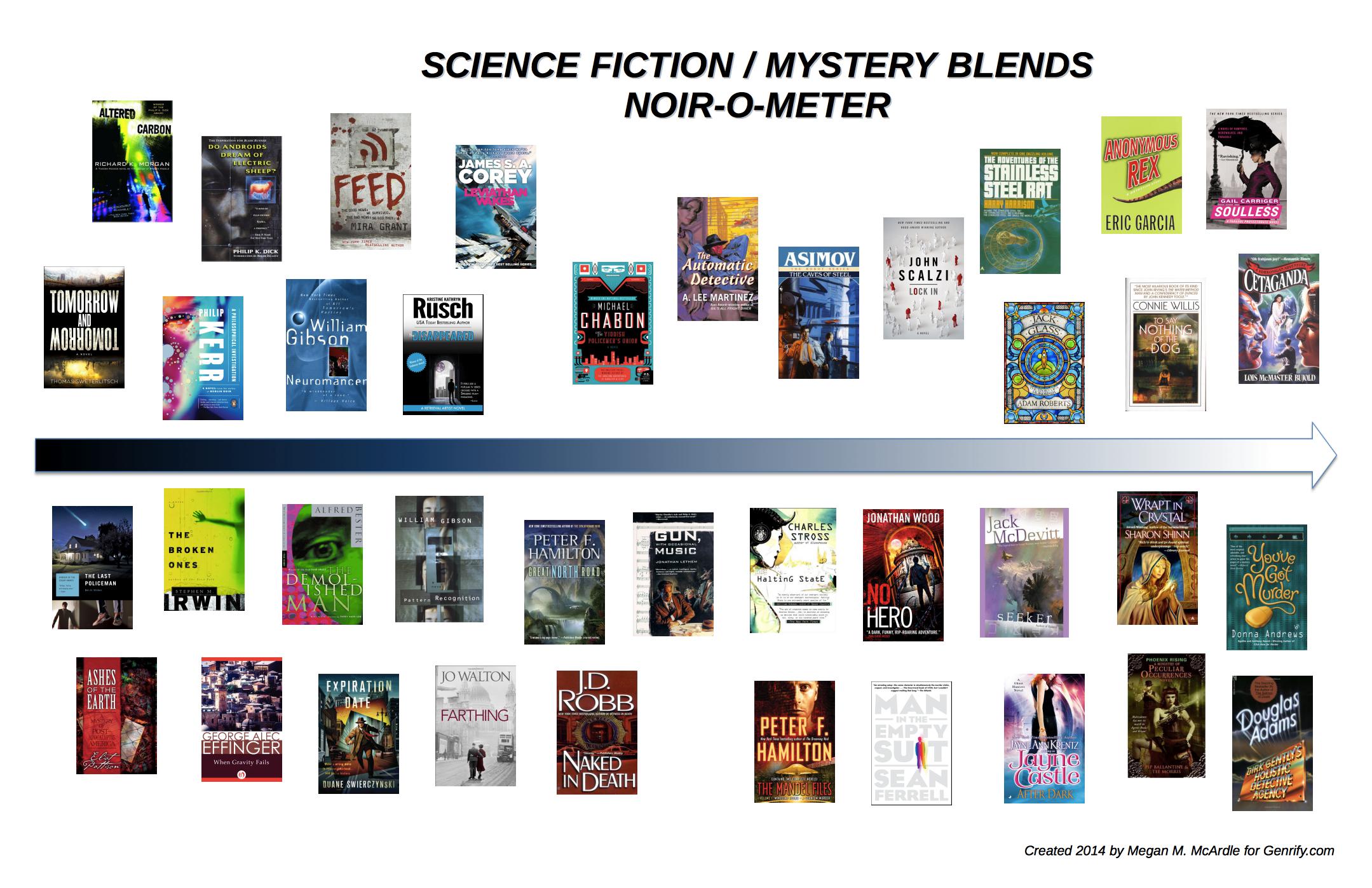
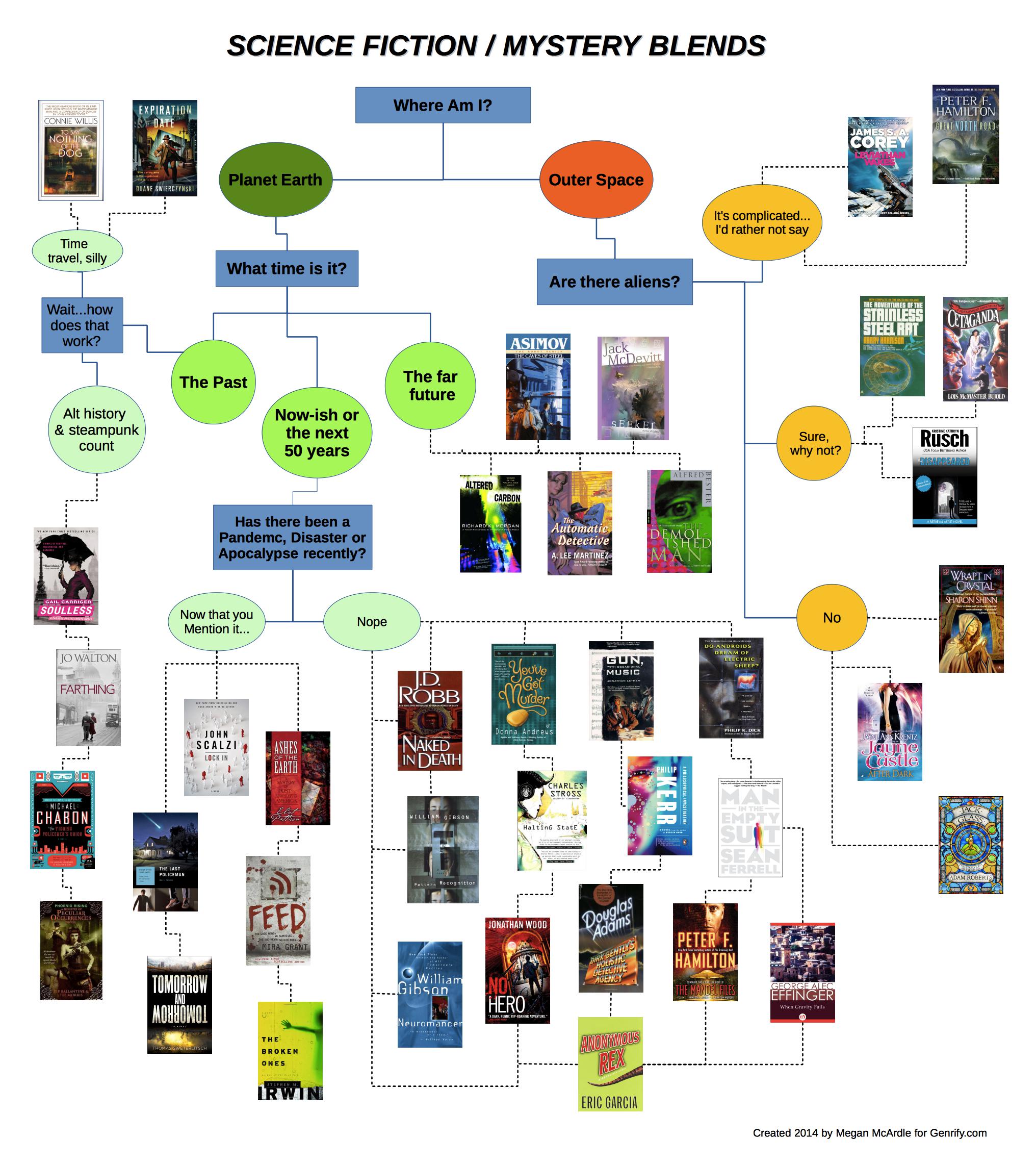
 is an example of one of those. Just as there are mysteries that look at the darkest impulses and actions of man, so does some SF. Although there are many SF writers that look to the future and see possibility and progress, there are just as many (maybe more) that see the shadowy paths that technology can take us on. They look to the future and see that humanity will probably take all their bad habits forward with them, including killing each other. The dark side of technology plus murder? These can be some pretty grim books.